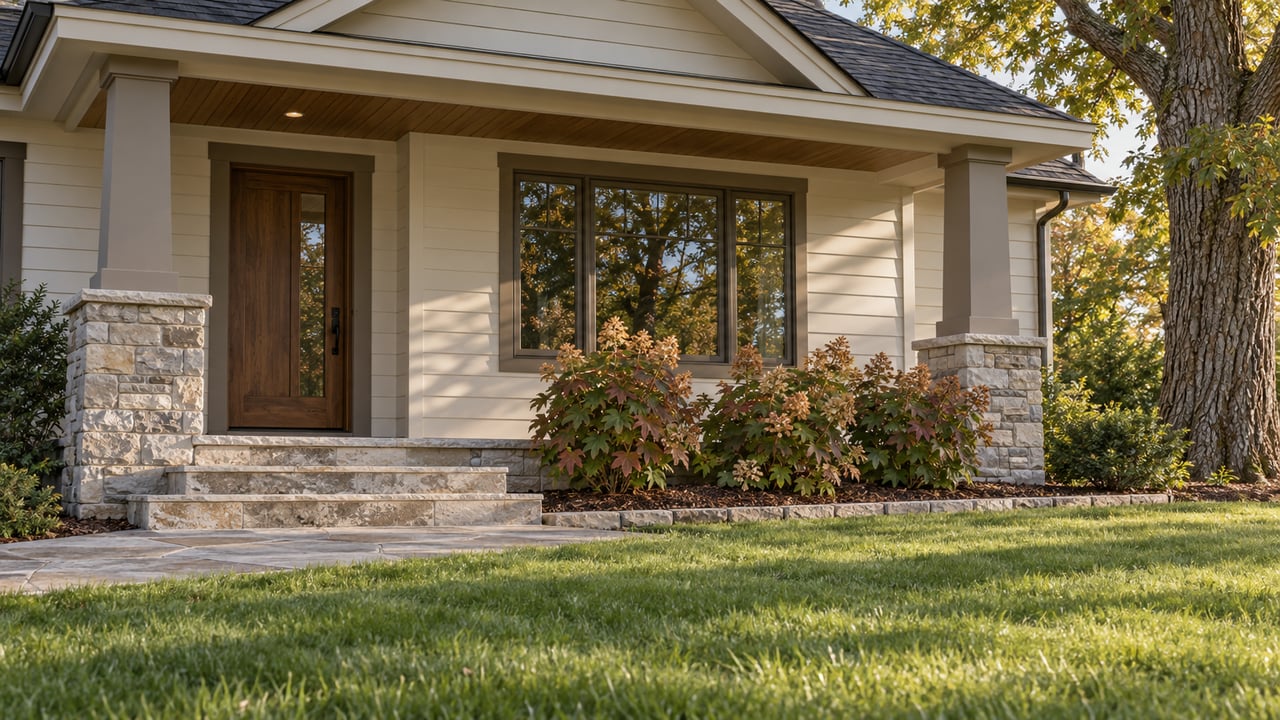
Who Owes You a Disclosure on a Rebuilt Sequoyah Hills House?
October 29, 2026
October 29, 2026
When a 1930s house on Cherokee Boulevard comes back on the market enlarged, re-roofed and opened up inside, who has to tell the buyer what was done to it? Most buyers assume the seller does, on Tennessee's standard condition disclosure. For a large share of the rebuilt homes in Sequoyah Hills, the statute says otherwise.
The volume of this work is easy to see. In February 2026, Knox News reported that enough construction trucks were parked along Cherokee Boulevard to make the neighborhood look like a new subdivision. Several of its older homes were being "seriously remodeled, enlarged or even being virtually rebuilt." The accompanying photo gallery showed a 1930-era home at 2221 Cherokee Blvd. and a 1950s-era home at 1233 Cherokee Blvd. on the market, next to images of new construction and major remodeling along the same street. Every one of those projects eventually becomes a sale, and the type of seller decides what paperwork the buyer gets.
Under Section 66-5-201, Tennessee's Residential Property Disclosure Act covers sales, exchanges, installment land contracts and lease-options on homes with one to four units, whether or not a licensed agent is involved. Section 66-5-209 then lists twelve kinds of transfers the Act does not cover. Several of them fit the way older, heavily reworked homes in an established neighborhood tend to change hands:
| Who is selling | Does the Act's disclosure requirement apply? |
|---|---|
| Executor, trustee, guardian or conservator administering an estate or trust | Excluded |
| An owner who has not lived in the home at any time in the three years before the transfer | Excluded |
| A builder making the first sale of a dwelling with a written warranty | Excluded |
| A seller at public auction | Excluded |
| A court-ordered or foreclosure transfer | Excluded |
| An owner-occupant selling the home they have lived in | Covered |
The three-year residency exclusion matters most during a rebuild wave. A renovator who buys an original-condition house, guts it, adds square footage and resells it has usually never lived there. The same goes for an owner who moved out years ago and has been managing the project from somewhere else. In those sales, the most heavily altered houses can arrive with no statutory disclosure at all.
The fiduciary exclusion matters too. When a longtime home passes through an estate or trust, the person signing the deed may never have lived in it. If that buyer then remodels and resells within a few years, the house may have gone through two sales in a row without the statutory form.
When the Act does apply, Section 66-5-202 says the owner has to provide either the statutory disclosure of the property's condition, including known material defects, or a disclaimer. The disclaimer is allowed only if the buyer waives the disclosure. The disclaimer's wording says the owner makes no representations or warranties and that the buyer takes the property "as is," with any defects handled under the purchase contract.
The full disclosure also has built-in limits that matter on a remodeled house:
Section 66-5-210 says the form is set by the General Assembly, and any substitute has to include every item and acknowledgment in that form. Even a complete, honest form only reflects what one owner knew. If a contractor did the framing before that owner bought the house, the owner may have very little to report.
So whether the seller is exempt or simply working from memory, the reliable written record of a Sequoyah Hills renovation is usually somewhere other than the disclosure.
For a property inside city limits, that record is at the City of Knoxville. The City's public Record Search can be searched by record number, address or parcel. Address searches can be filtered by date and by record type, including "Building or Trade Permits." Each result shows the record type, address, description, opened date, status and status date. The search returns up to 200 results per address, newest first. The City's My Project Portal links to the same search and to the Accela Citizen Access system, where residential addition and alteration permits are their own categories.
Pages like these don't list finish quality or contractor names. What they do show, with a date attached, is whether a permit was opened for an addition and what its status is today. That matters because a permit doesn't stay valid indefinitely. In its coverage of one Sequoyah Hills project, WATE reported that permits in Knoxville and Knox County "typically" expire if work doesn't begin within 180 days or stops for more than 180 days, and that most permits are valid for one to two years.
That project shows what happens when a remodel loses track of its permits. In July 2025, WATE reported on a Cherokee Boulevard house that had sat as an unfinished remodel for years, and on a neighbor's lawsuit alleging code and permitting violations. In March 2026, WATE reported that a court-approved settlement gave the owner 45 days to submit applications and plans for city permits, including a building permit and a site permit. Once that step was complete, the owner had 30 months to finish the project.
Most Sequoyah Hills renovations never come anywhere near a courtroom. Still, the case shows that a house's legal status can depend on permit filings and deadlines that are in no listing description. If a house like that sold while those obligations were open, the disclosure, if there was one, would say only what the seller chose to put on it. The permit history would show where the paperwork actually stood.
Part of Sequoyah Hills has another set of records. The Scenic Drive Area of Sequoyah Hills Neighborhood is a Neighborhood Conservation overlay, designated NC-1 in 2006. According to its designation report and design guidelines, the overlay covers Scenic Drive, Southgate north of Sagwa, and Blows Ferry south of Alta Vista. It does not cover the whole neighborhood.
On properties inside designated overlays, Knoxville-Knox County Planning says the Historic Zoning Commission reviews alterations, demolition or moving of buildings, and proposed new construction. So on those blocks, an addition or a demolition can leave a record with Planning's historic zoning staff on top of the City permit. Two houses a few streets apart can have very different files depending on which side of the overlay boundary they sit on.
Sellers are tied to the same permit record. Knox County reappraises property on a two-year cycle, and the Assessor's office says it folds permits, demolitions, structural changes and comparable sales into its records and valuation models. The Assessor's FAQ says additions or remodeling can lead to a field review or an adjustment when permit status is looked into. The county expected 2026 reappraisal notices in April 2026, Board of Equalization appeals in June, and the next reappraisal in 2028. The Assessor also notes that a change in assessed value does not automatically mean a tax increase.
In other words, the permits pulled for a renovation become part of how the county sees the house. A seller who enlarged a home, and a buyer comparing the listing's square footage with the public record, are both looking at the same file. When the listing, the permits and the county's records all describe the same house, there are fewer questions to settle between contract and closing.
Does every Sequoyah Hills seller have to complete Tennessee's disclosure form? No. Section 66-5-209 excludes several kinds of transfers, including estate and trust administration, auctions, foreclosures, a builder's first sale of a dwelling with a written warranty, and sales by an owner who hasn't lived in the home in the three years before the transfer.
If I get a disclosure, does it guarantee the renovation was done right? The statute says the disclosure is not a warranty, the seller doesn't have to inspect, and it doesn't replace buyer or professional inspections.
Is all of Sequoyah Hills under historic review? No. The NC-1 conservation overlay covers the Scenic Drive Area: Scenic Drive, Southgate north of Sagwa, and Blows Ferry south of Alta Vista.
This post is general information, not legal or tax advice. Before you rely on any of it, confirm how these rules apply to your property with a real estate attorney or the relevant office.
If you're getting ready to sell a Sequoyah Hills home you've expanded or remodeled, I'll pull the permit history with you before we list. That way the marketing, the paperwork and the public record all describe the same house. Reach out to Krista Freshour and let's go through your file together. List With Krista.
Stay up to date on the latest real estate trends.

Whether you're looking to buy, sell, or invest, her expertise and resources are here to help you achieve your goals. Connect with her today and discover how Krista can support you!